
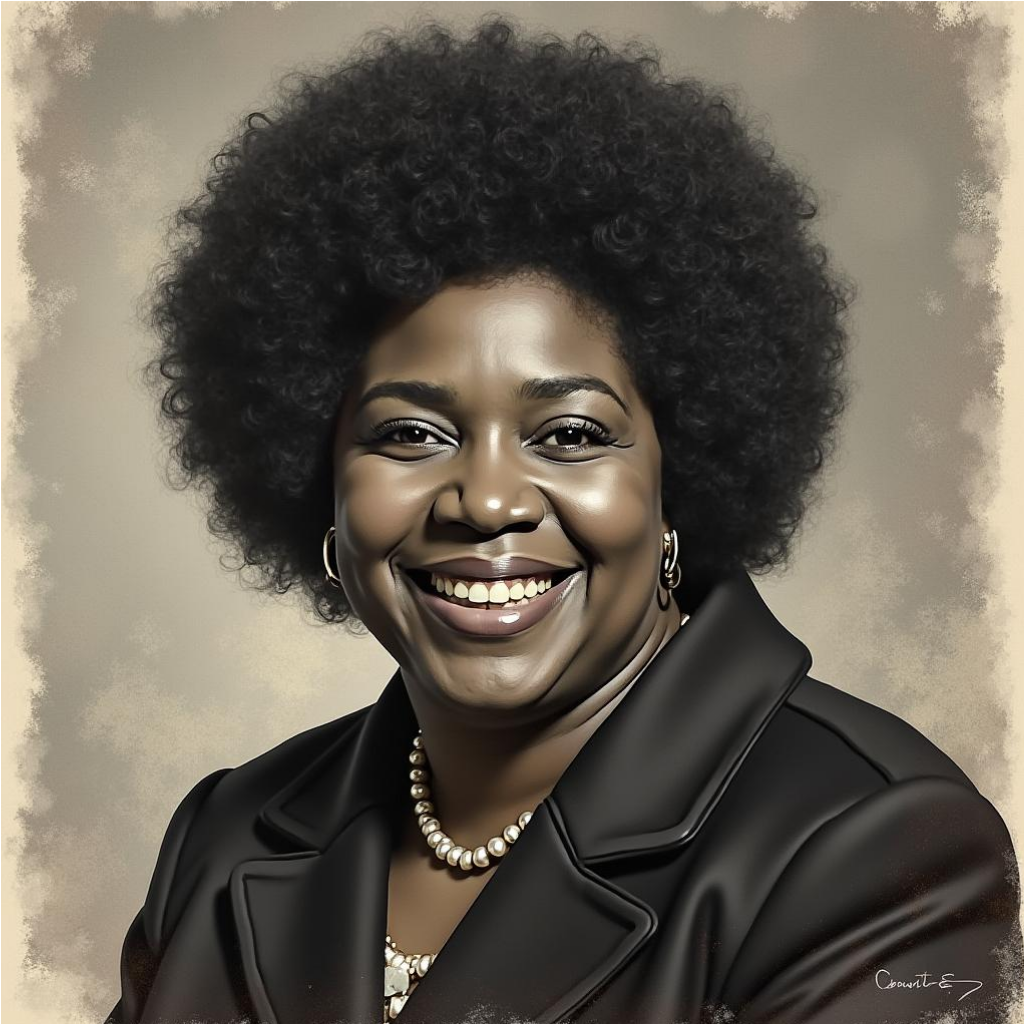
This is a Mahalia Jackson obituary that celebrates her extraordinary life and legacy. There are some voices that merely entertain. Then there was the voice of Mahalia Jackson—a voice so big, so true, and so laced with the raw earth of human suffering and divine hope that it didn’t just fill rooms; it altered the course of American history. When Mahalia Jackson closed her eyes and sang, she wasn’t just performing. She was talking directly to God, and she invited the whole world to listen.
On January 27, 1972, that magnificent voice went quiet at the age of 60, leaving a void in the soul of a nation that will never quite be filled. Here is the story of the granddaughter of enslaved plantation workers who became the undisputed Queen of Gospel and the soundtrack to the Civil Rights Movement.
From New Orleans Poverty to the Heavenly Choir
Mahalia Jackson entered this world on October 26, 1911, born into a cramped three-room house in New Orleans. Her early years were a heavy burden of poverty, physical ailment—born with bowed legs—and the devastating loss of her mother at just five years old. Yet, mid-week scrubbing of laundry and strict church Sundays birthed a resilience.
It was in the Plymouth Rock Baptist Church that young Mahalia found her refuge. She absorbed the traditional hymns, but she infused them with the secular rhythms of the blues she heard on the streets—the heavy, emotional thud of Bessie Smith and Ma Rainey. By the time she moved to Chicago in 1927 as part of the Great Migration, her vocal power was undeniable. Chicago thought it was getting a laundress; instead, it received a prophet.
The Queen of Gospel Rules the Secular World
In an era when sacred music stayed inside the church, Mahalia Jackson broke the windows to let the sound out. She teamed up with Thomas A. Dorsey, the “Father of Gospel Music,” and together they weaponized song. In 1947, she recorded “Move On Up a Little Higher.” It didn’t just sell; it exploded. The record sold an astonishing eight million copies, an astronomical number for a gospel track at the time.
Suddenly, her booming contralto was booming out of Carnegie Hall, across Europe, and into television screens nationwide. She refused to sing secular blues, famously stating, “Gospel music is the song of hope. When you sing blues, you’ve still got the blues.” She proved to the music industry that the hunger for genuine, heartfelt faith was a universal human trait.
The Soundtrack of Freedom and the Dream
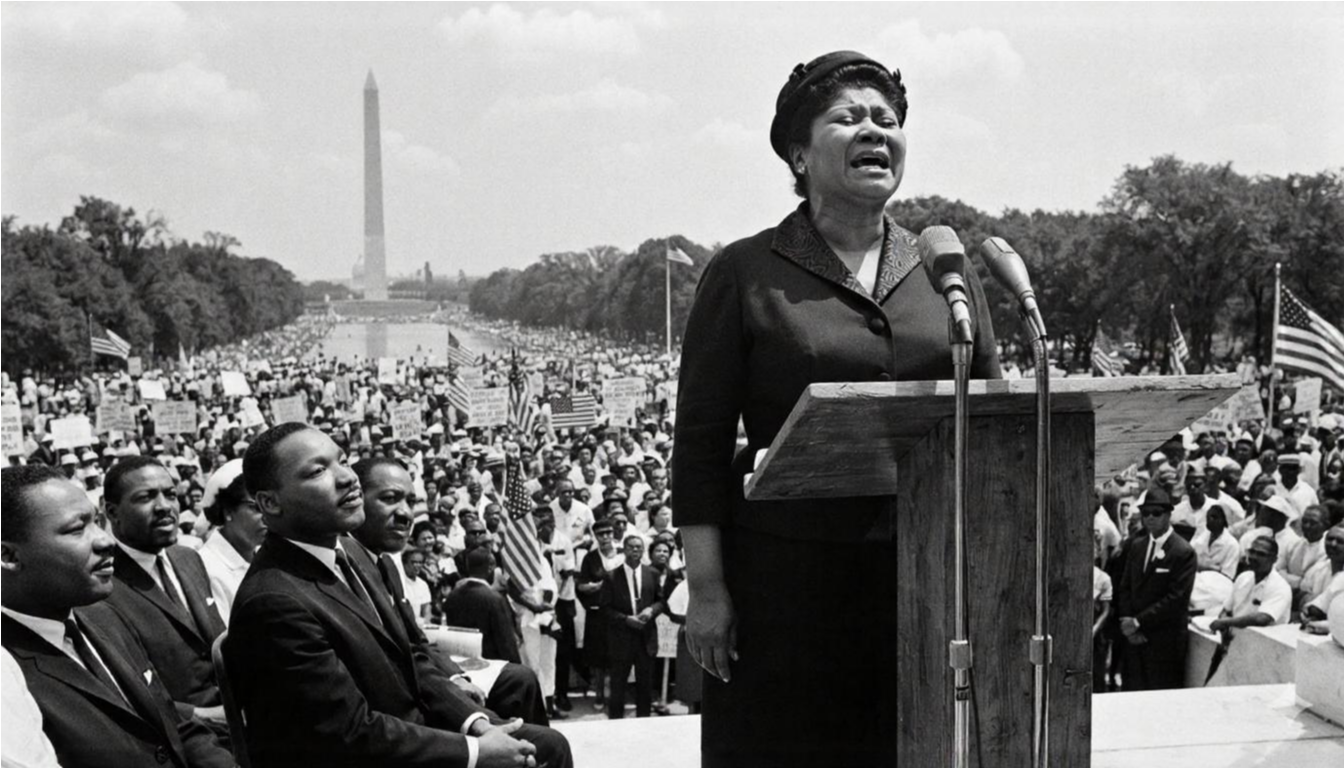
Mahalia’s legacy is etched not just in vinyl, but in the very fabric of American freedom. She put her career and her safety on the line to stand at the frontline of the Civil Rights Movement. She became a close friend, confidante, and financial supporter of Dr. Martin Luther King Jr. At the 1963 March on Washington, before a crowd of 250,000 people, she delivered a soul-stirring rendition of “I’ve Been ‘Buked, and I’ve Been Scorned.”
Later that day, as Dr. King spoke from his prepared notes, it was Mahalia who shouted from behind him: “Tell ’em about the dream, Martin! Tell ’em about the dream!” Dr. King set his notes aside, looked out at the crowd, and delivered the most famous speech in American history. Mahalia didn’t just witness history—she prompted it.
The Final Curtain and an Enduring Light
By the late 1960s, a lifetime of fighting for justice, relentless touring, and severe health battles took their toll. Her final public performance was in Germany in 1971, where her body was failing but her spirit remained untouched. When she succumbed to heart failure in Illinois, the world wept. At her funeral in Chicago, 50,000 citizens lined up in the freezing cold to pay their respects.
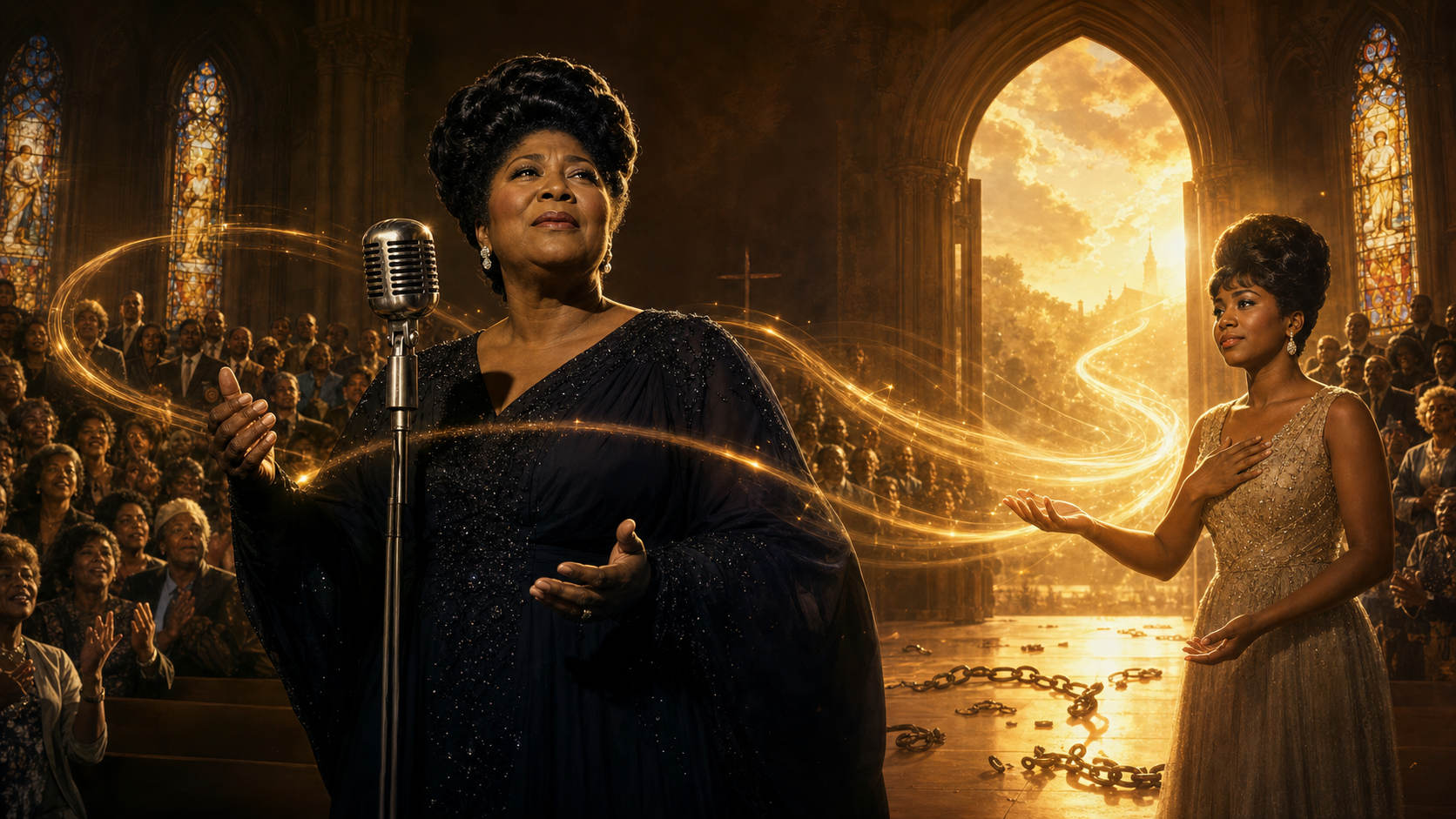
Coretta Scott King described her as “black, proud, and beautiful.” Aretha Franklin sang “Precious Lord, Take My Hand” over her casket—a passing of the torch from one generational giant to another. Mahalia Jackson did not sing to make money or to find fame. She sang because her soul demanded it, and because she knew that the right song, sung with enough conviction, could break the chains of hatred. She has moved on up a little higher, but her voice still echoes down here.
FAQs
What was Mahalia Jackson’s cause of death?
Mahalia Jackson passed away on January 27, 1972, at the age of 60 due to heart disease and complications from diabetes. She had suffered from health issues, including sarcoidosis, for much of her adult life, which were worsened by her gruelling tour schedules and the intense stress of her civil rights work.
What did Mahalia Jackson shout to MLK during his “I Have a Dream” speech?
While Dr. Martin Luther King Jr. was speaking at the 1963 March on Washington, Mahalia shouted from the stage behind him: “Tell ’em about the dream, Martin! Tell ’em about the dream!” Dr. King heard her prompt, set aside his prepared text, and delivered the historic, unscripted “I Have a Dream” section of his speech.
Did Mahalia Jackson ever sing secular music or the blues?
No, she strictly refused to sing secular blues or mainstream commercial music, despite being offered massive amounts of money by record labels. She famously stated, “Gospel music is the song of hope. When you sing blues, you’ve still got the blues.” She dedicated her vocal talent entirely to sacred gospel music
What was Mahalia Jackson’s biggest hit song?
Her commercial breakthrough and biggest career hit was her 1947 recording of “Move On Up a Little Higher.” It became an unprecedented phenomenon for a gospel track, selling an astonishing eight million copies worldwide and launching her into global stardom.
What was her relationship with Dr. Martin Luther King Jr.?
Mahalia Jackson was a close personal friend, confidante, and fiercely loyal supporter of Dr. King. She regularly travelled with him to sing at civil rights rallies, used her commercial success to support the Southern Christian Leadership Conference (SCLC) financially, and famously sang his favorite hymn, “Precious Lord, Take My Hand,” at his funeral in 1968.
Where is Mahalia Jackson buried?
Following a massive funeral in Chicago attended by 50,000 people, her body was returned to her birthplace of New Orleans. She is buried in Providence Memorial Park and Mausoleum in Metairie, Louisiana, where fans still visit to pay their respects to the Queen of Gospel.